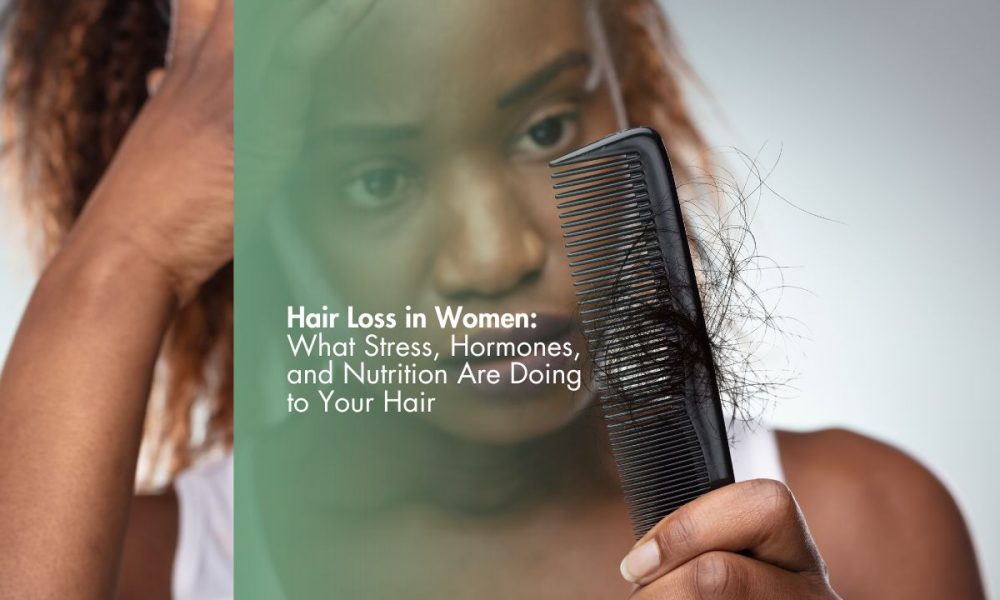
There are very few things we treat at Nature of Skin that carry as much emotional weight as hair loss. Patients come in having spent months, sometimes years, watching their part widen, finding more hair on their pillow, or pulling back their ponytail and noticing how much thinner it’s gotten. By the time they sit down with Dr. Obayan, many of them have already been told to “just wait and see” or been handed a generic recommendation that hasn’t helped.
The good news is that hair loss in women is treatable. But getting there requires starting in the right place; with an accurate diagnosis of what’s actually driving it.
Why Women’s Hair Loss Is So Often Misunderstood
Hair loss in women doesn’t always look the way most people picture it. It rarely shows up as a receding hairline. Most often, it’s a diffuse thinning across the crown, a part that’s noticeably wider than it used to be, or a ponytail that’s lost its thickness. And because it happens gradually, it’s easy to dismiss: both by patients and by clinicians who aren’t looking carefully enough.
The other complicating factor is that female hair loss is almost never caused by just one thing.
The Three Drivers We Look At First
Hormonal Shifts
Androgenetic alopecia: the most common form of hair loss in both men and women is driven by the effect of androgens on genetically susceptible follicles. For women, estrogen and progesterone play a modulating role, which is why hair loss so often intensifies during and after pregnancy, at perimenopause, and when hormonal contraception changes. Thyroid dysfunction is another common culprit that’s frequently missed: both hypo and hyperthyroid states can cause diffuse shedding that looks like something else entirely.
Stress
A significant physical or emotional stressor: illness, surgery, a major life event can trigger telogen effluvium: a condition where a large number of hairs shift simultaneously into the resting phase and shed about two to three months after the trigger. The delay is what makes it so confusing. Patients often can’t connect what’s happening to their hair now with something that happened months ago.
Chronic, ongoing stress is subtler but just as damaging. It suppresses the hair growth cycle, elevates cortisol in ways that disrupt hormonal balance, and quietly depletes the nutrients that follicles depend on.
Nutrition
Hair follicles are among the most metabolically demanding structures in the body. Deficiencies in iron (particularly ferritin), vitamin D, zinc, biotin, and certain B vitamins are directly linked to thinning and excessive shedding. For women who follow restrictive diets, have had bariatric surgery, or deal with conditions that affect nutrient absorption, nutritional hair loss is common and often the piece of the puzzle that gets overlooked longest.
“I had a wonderful experience on my first time at this office. The staff was great and the doctor was extremely professional and knowledgeable.”
— Tyrone S. (Verified Google Review)
Schedule a consultation with Dr. Obayan for a thorough hair loss evaluation and a treatment plan that’s built around what’s actually causing yours.
Why Getting the Diagnosis Right Changes Everything
The treatment for androgenetic alopecia is completely different from the treatment for telogen effluvium. Both are different from the treatment for alopecia areata, traction alopecia, or a nutritional deficiency. Starting the wrong treatment doesn’t just waste time; it can delay resolution and, in some cases, make things worse. Dr. Obayan’s approach to hair loss in women starts with a comprehensive evaluation: a detailed medical and hormonal history, honest conversation about diet and lifestyle, and targeted lab work that goes beyond the basics to find what’s actually driving the loss.
What Treatment Actually Looks Like
Because women’s hair loss is rarely caused by one thing, the most effective plans address multiple drivers at once. Depending on what’s going on, Dr. Obayan’s treatment plan may include:
Medical and Hormonal Therapies
Topical or oral minoxidil, anti-androgen medications, or, in coordination with your OB-GYN or endocrinologist, hormonal therapies that address the underlying imbalance. For patients with thyroid-related shedding, working alongside the right specialist is an important part of the plan.
Nutritional Restoration
Where deficiencies are identified, targeted supplementation and dietary guidance become part of treatment. Restoring ferritin to optimal levels, for example, can produce meaningful improvements in shedding over time but it requires proper dosing and monitoring, not just an over-the-counter hair vitamin.
PRP and Regenerative Scalp Therapies
PRP scalp injections support follicle survival and extend the active growth phase of the hair cycle. The evidence base has grown significantly, and for women with androgenetic alopecia especially, it’s one of our most requested and most effective treatments.
Stress and Lifestyle Support
Dr. Obayan’s integrative training means she doesn’t stop at the prescription pad. Sleep quality, stress levels, and overall lifestyle are part of every hair loss conversation — because for many patients, these are the factors that make everything else work better.
A Word for Women of Color
Central centrifugal cicatricial alopecia (CCCA): a scarring form of hair loss that begins at the crown and spreads outward, disproportionately affects black women and can cause permanent follicle loss if it’s not caught and treated early. Traction alopecia, caused by chronic tension from tight hairstyles, is also prevalent and frequently undertreated.
Dr. Obayan is deeply familiar with the full spectrum of hair loss conditions affecting women of color. Early diagnosis isn’t just helpful here: for scarring alopecias, it’s everything.
You Don’t Have to Just Watch It Happen
Hair loss is not something you have to accept as inevitable. With the right diagnosis and the right plan, most patients see real, meaningful improvement and many feel a genuine shift in how they carry themselves day to day.
You’ve been patient long enough. Book a consultation with Dr. Obayan and get some real answers about what’s happening and what to do about it.