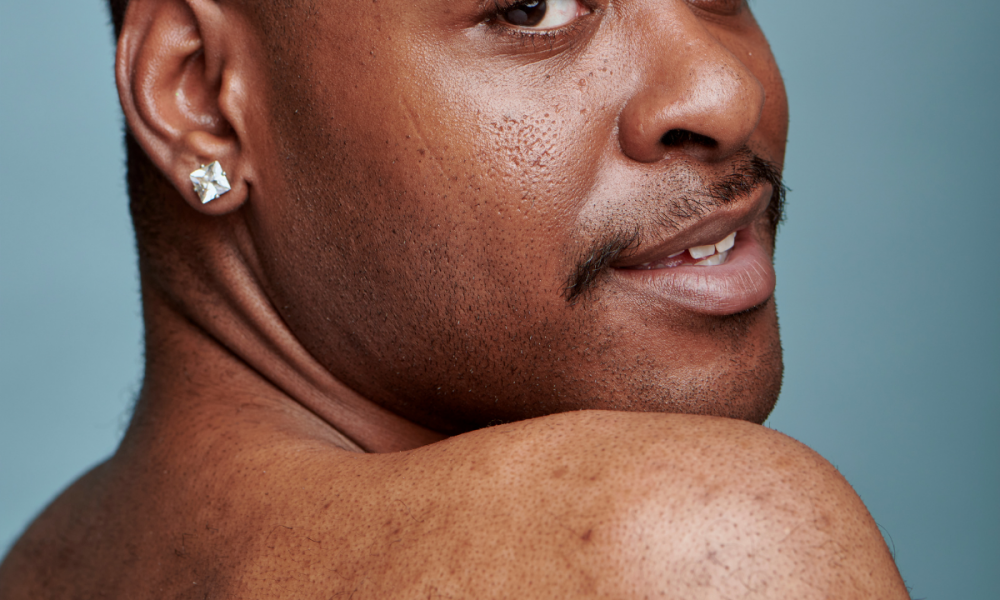
If you have a deeper skin tone, you’ve probably noticed that your skin remembers things. A pimple from three months ago there is still a visible dark spot. A patch of melasma that flared last summer and hasn’t fully faded. Uneven tone that no amount of foundation quite covers.
Your skin isn’t doing anything wrong. What you’re seeing is the biology of melanin-rich skin playing out in real time: the way it responds to UV exposure, and why that response looks different from what most skincare content describes. Understanding that relationship is the first step toward actually managing it. And in Austin’s summer, when UV exposure is at its most intense, that understanding matters more than ever.
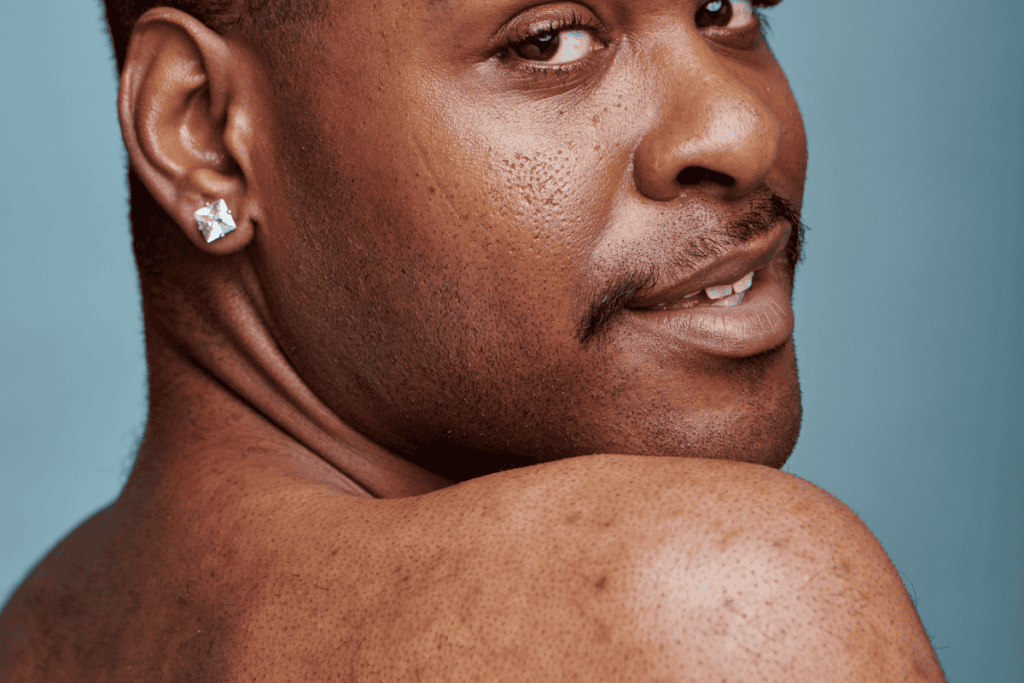
Melanin is your skin’s built-in protection against UV radiation. Darker skin tones have more of it and more active melanocytes, the cells that produce it. This is genuinely protective in many ways: patients with skin of color have a lower lifetime risk of skin cancer and show fewer signs of UV-induced collagen breakdown than lighter-skinned patients.
But that same melanin reactivity has a cost. UV exposure, inflammation, hormonal changes: when skin of color encounters any of these stressors, the melanocytes respond more intensely and more persistently than they would in skin with less melanin. The result is hyperpigmentation that forms faster, goes deeper, and lasts longer.
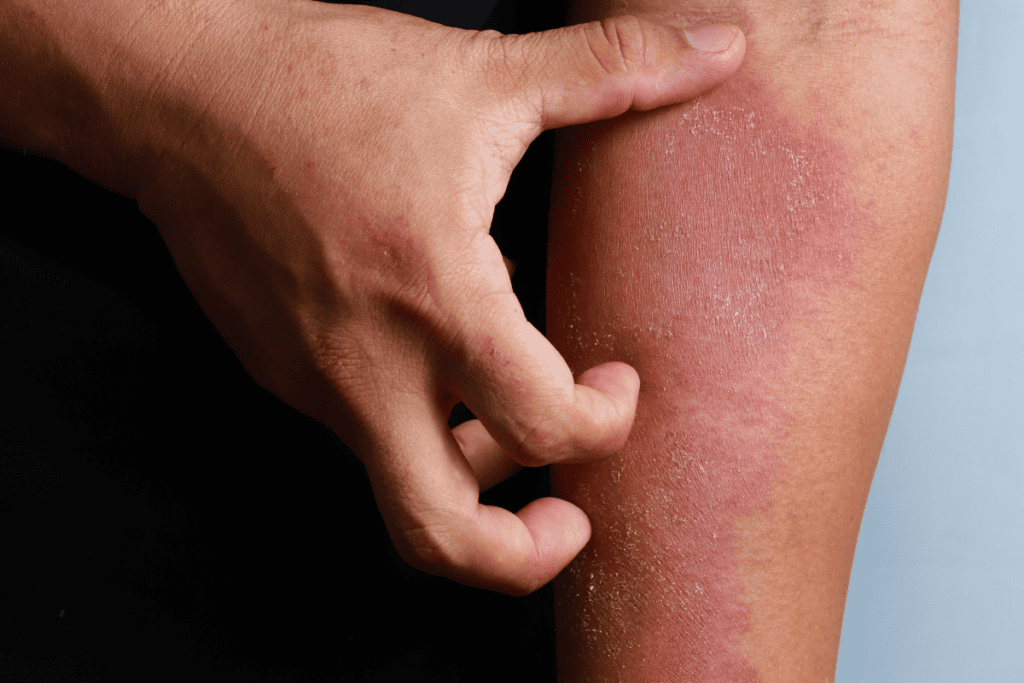
Any time skin experiences inflammation, it risks leaving a mark. acne, eczema flares, a bug bite, an ingrown hair, sometimes even an aggressive facial treatment can all trigger PIH. The inflammatory process activates melanocyte activity, and the resulting dark spot can linger for months or years after the original insult has completely resolved.
Austin’s summer stacks the risk. Heat and sweat can worsen existing inflammation, new acne breakouts (a common summer development) create new PIH opportunities, and UV exposure darkens existing spots before they’ve had a chance to fade.
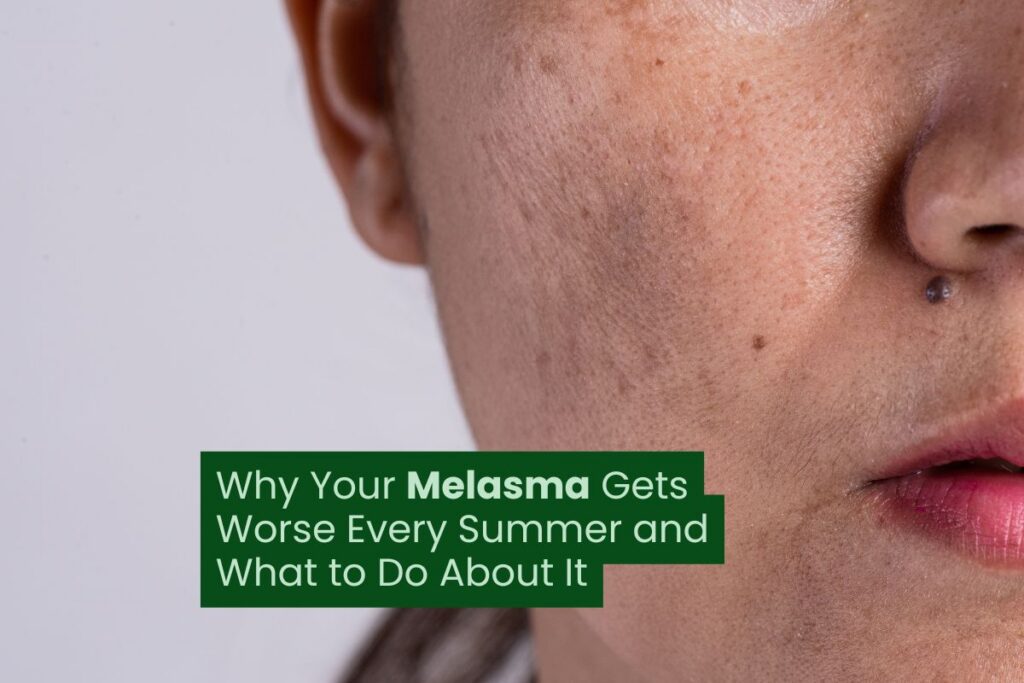
Melasma is hormonally driven hyperpigmentation that disproportionately affects patients with skin of color, particularly women. It appears as symmetrical brown or grayish-brown patches, most often on the cheeks, forehead, and upper lip. What makes it particularly stubborn is its sensitivity to UV exposure: even brief, incidental sun, not just direct outdoor time, can deepen existing melasma and trigger new patches.
Heat is also an independent trigger. Elevated skin temperature stimulates melanocyte activity regardless of UV exposure, which means that Austin’s summer is working against melasma patients on multiple fronts simultaneously.
Discrete dark spots caused by years of accumulated UV exposure, sometimes called sunspots or solar lentigines, are less common in younger patients with skin of color but become increasingly prevalent with age. In patients who have spent years in high-UV environments (and definitely Austin qualifies), these can develop earlier and be more widespread than many patients expect.
“Dr. Obayan is fantastic! I hadn’t seen a dermatologist before and she helped me feel comfortable as talked me through the proposed treatment. I know everyone’s experience will be different but my acne and dark spots cleared in about 6-7 weeks after following the treatment plan. The staff in the office were also welcoming and professional, definitely grateful to have found this place and highly recommend!”
Stavonna B., Verified Google Review
Book a consultation with Dr. Obayan for a thorough evaluation of your hyperpigmentation and a treatment plan built specifically for your skin.
The skincare industry has historically designed hyperpigmentation treatments for lighter skin tones and patients with skin of color have often been on the receiving end of protocols that don’t account for how their melanocytes actually behave.
Treatments that are safe and appropriate for lighter skin can trigger significant PIH in darker skin tones. Aggressive peels, certain laser wavelengths, and even some over-the-counter brightening products can worsen the problem they’re supposed to solve. This is one of the most common scenarios Dr. Obayan sees: patients who came in with PIH and left a previous provider with more of it.
The answer isn’t to avoid treatment. The goal is to get the right treatment from someone who genuinely understands how your skin works.
No hyperpigmentation treatment will produce lasting results without rigorous, consistent photoprotection. This means broad-spectrum SPF 30 or higher, applied generously, reapplied every two hours. For patients with melasma or active PIH, tinted mineral sunscreens are particularly valuable because they protect against visible light, which stimulates melanocyte activity in skin of color even independently of UV.
This isn’t just about preventing new spots. Without consistent SPF, treatments are working against an ongoing trigger. The two have to happen at the same time.
At Nature of Skin, our integrative skin wellness approach to hyperpigmentation in skin of color involves building a targeted topical regimen around ingredients with both clinical evidence and a favorable safety profile for melanin-rich skin. Depending on your specific pattern of pigmentation and skin sensitivity, this may include tranexamic acid, azelaic acid, niacinamide, vitamin C, kojic acid, and, in appropriate candidates, hydroquinone or retinoids. The combination matters as much as the individual ingredients, and the regimen is built for your skin, not adapted from a generic brightening protocol.
When topicals alone aren’t producing the results a patient needs, in-office treatments can meaningfully accelerate progress. Our procedures for hyperpigmentation in skin of color include chemical peels formulated and calibrated specifically for melanin-rich skin, microneedling protocols that address pigmentation without the risks associated with aggressive laser use, and laser and light-based treatments, selected with care, where they’re appropriate. The selection process is as important as the treatment itself: the wrong procedure does more harm than good.
Laser and light-based treatments for hyperpigmentation in skin of color is an area where expertise matters enormously, and where patients have reason to be thoughtful about who they trust with their skin. Certain laser wavelengths that work well for sun-induced pigmentation in lighter skin can trigger significant PIH in deeper skin tones. This has historically led to an understandable hesitancy and sometimes an unnecessary one.
At Nature of Skin, our aesthetics practice includes laser and light-based treatments that are selected and calibrated specifically for skin of color with parameters chosen to address the pigmentation concern while minimizing the risk of making things worse. Not every patient with skin of color is a candidate for every laser treatment, and Dr. Obayan will be honest about that during your consultation.
Hyperpigmentation in skin of color is common, it can be a source of immense frustration, and for a lot of patients it feels permanent. In my professional experience, this is simply not the case. With the right combination of protection, a targeted home regimen, and well-chosen in-office treatments, most patients see real, lasting improvement: even in Austin’s unrelenting summer.
Your skin has its own story. Book with Dr. Obayan and get a plan that understands it.