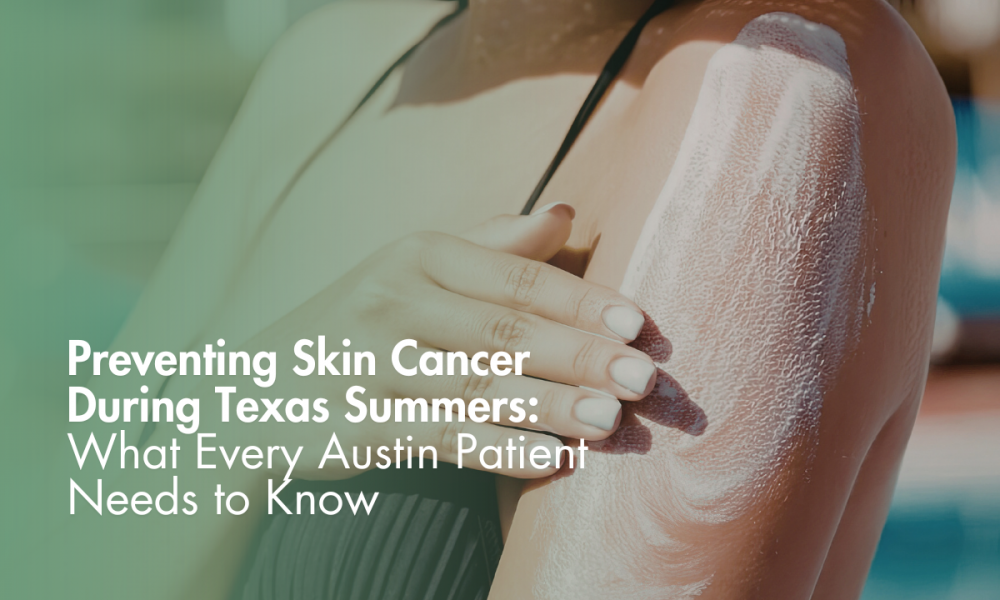
Texas summers are not gentle. Austin averages more than 300 days of sunshine per year, and from May through September, UV index levels routinely hit “very high” to “extreme”: the same levels found in tropical destinations. For anyone spending time outdoors here, skin cancer prevention isn’t a seasonal concern. It’s a year-round medical priority.
Understanding UV Exposure and What It Does to Your Skin
UV radiation comes in two forms that matter for skin health. UVB rays cause sunburn and play a direct role in skin cancer by damaging DNA in skin cells. UVA rays penetrate more deeply, contributing to photoaging and the DNA damage that can trigger malignant changes. Both are present year-round in Texas and both penetrate through windows, clouds, and many fabrics.
The three most common skin cancers: basal cell carcinoma, squamous cell carcinoma, and melanoma are all linked to cumulative UV exposure over a lifetime. The habits you build now shape your risk in the decades ahead.
A Myth Worth Correcting: Skin Cancer and Skin of Color
One of the most dangerous myths in dermatology is that people with darker skin tones don’t need to worry about skin cancer. While higher melanin content does provide some natural UV protection, it does not eliminate risk. Skin cancer in patients with skin of color is frequently diagnosed at a more advanced stage: precisely because of this misconception, on the part of both patients and, sometimes, clinicians.
Melanoma in patients with skin of color also tends to appear in different locations: on the palms, soles, nail beds, and mucous membranes rather than sun-exposed areas. This means sun avoidance alone isn’t sufficient protection, and regular skin checks with a knowledgeable dermatologist matter regardless of skin tone.
“Great service! Very professional and attentive staff. I’ve had nothing short of great results with my skin since I’ve been going there. Excellent customer service.”
— Kristina H. (Verified Google Review)
Schedule your skin cancer screening with Dr. Obayan: because early detection is the single most powerful tool we have.
Your Texas Summer Sun Protection Protocol
Effective sun protection in an Austin summer takes more than a bottle of SPF 15 kept in a beach bag. Here’s what actually works:
Getting Sunscreen Right
Broad-spectrum SPF 30 or higher is the minimum. SPF 50 is preferable for extended outdoor exposure. Apply generously; most people use far less than the amount needed to reach the labeled SPF value and reapply every two hours, or immediately after swimming or heavy sweating.
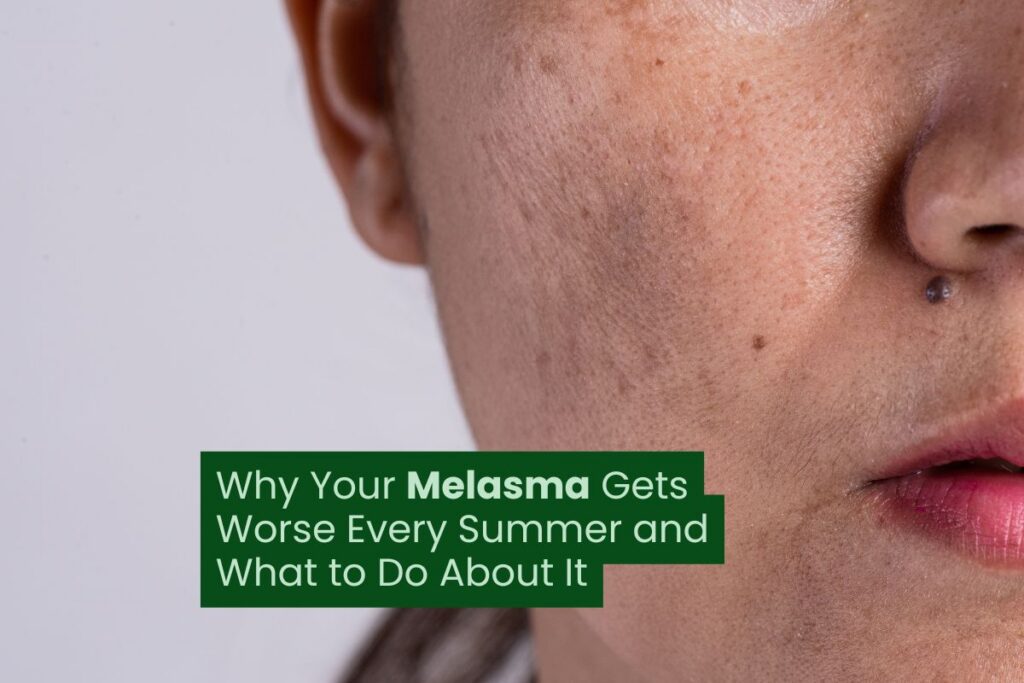
For patients with skin of color, tinted mineral sunscreens containing zinc oxide or titanium dioxide offer an important advantage: they protect against visible light, which can trigger melasma and PIH, in addition to UVA and UVB. Many patients with deeper skin tones have avoided mineral sunscreens because of the white cast. Tinted formulas solve that problem.
Protective Clothing and Shade
Clothing is one of the most underutilized forms of sun protection. UPF-rated garments provide reliable coverage that doesn’t require reapplication. Wide-brimmed hats protect the face, ears, and neck. UV-blocking sunglasses can protect the skin around the eyes and reduce the risk of ocular melanoma.
In Austin’s peak summer months, minimizing outdoor activity between 10 a.m. and 4 p.m. meaningfully reduces overall UV exposure.
The Areas Most People Miss
The ears, the back of the neck, the tops of the feet, the scalp (particularly in patients with thinning hair), and the lips are frequently missed and are common sites for skin cancers. Lip balm with SPF is an easy, overlooked addition.
Annual Skin Checks: What They Are and Why They Matter
A full-body skin examination allows for the detection of early skin cancers including: atypical moles, precancerous lesions like actinic keratoses, and early melanoma before they progress. Skin cancer caught at an early stage is almost always treatable. Caught late, the prognosis is significantly worse.
The American Academy of Dermatology recommends annual skin checks for most adults. Patients with a personal or family history of skin cancer, a history of blistering sunburns, or a large number of moles may need more frequent monitoring.
The ABCDEs of Melanoma: Know What to Look For
Between annual skin checks, knowing what to watch for can make a real difference:
- Asymmetry — one half of a mole doesn’t match the other
- Border — edges are irregular, ragged, or blurred
- Color — uneven distribution, or shades of brown, black, red, white, or blue
- Diameter — larger than a pencil eraser (6mm), though melanomas can be smaller
- Evolving — any change in size, shape, color, or any new symptom such as bleeding or itching
Any spot that is new, changing, or simply doesn’t look like your other moles warrants prompt evaluation. When in doubt, get it checked.
Skin Cancer Prevention Is Part of Everything We Do
At Nature of Skin, skin cancer prevention is woven into every patient interaction: not siloed into a separate visit. Whether you’re coming in for acne, hair loss, a cosmetic concern, or a routine check, Dr. Obayan evaluates your skin comprehensively.
She also supports patients in building practical, sustainable sun protection habits that fit real life in Austin, not a theoretical routine designed for someone who never goes outside.
The best time to get a skin check is before something changes. Book your appointment with Dr. Obayan and head into summer knowing your skin has been seen by someone who really knows what to look for.