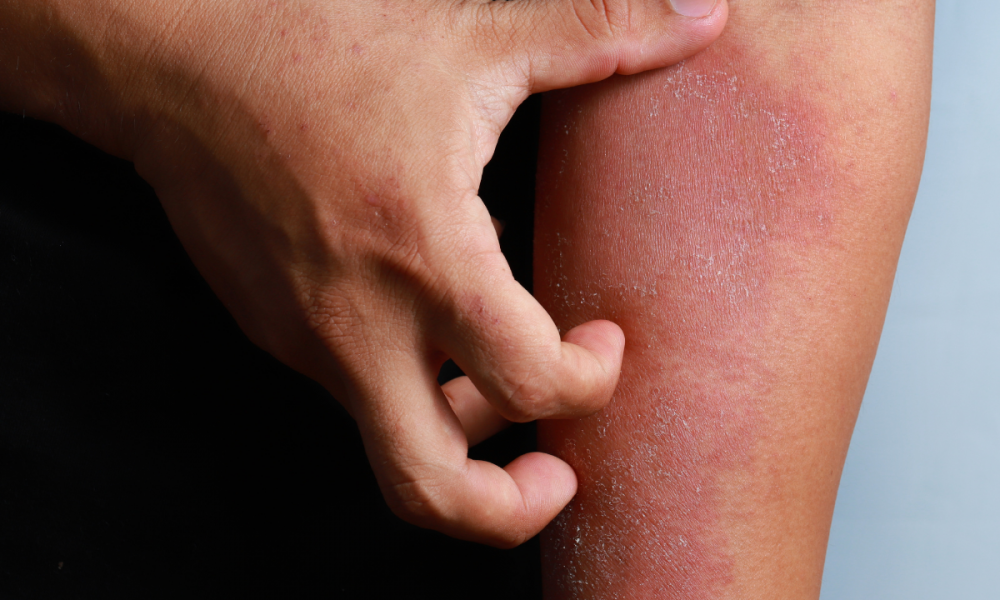
If you have eczema, you already know that summer in Austin is its own particular challenge. The heat that everyone else is celebrating is the same heat that makes your skin itch, redden, and flare in ways that feel completely out of your control. By July, a lot of patients have been in reactive mode for weeks: searching for quick treatment fixes, managing symptoms, wondering when it will settle down.
It doesn’t have to be this chaotic. Understanding why summer triggers flares and building a plan around those triggers can radically change your experience with eczema significantly.
Why Summer Is So Hard on Eczema Skin
Eczema, technically atopic dermatitis, is a chronic inflammatory skin condition characterized by a compromised skin barrier. That barrier normally functions as a seal, keeping moisture in and irritants out. With eczema-prone skin, the skin is perpetually more vulnerable to everything it comes into contact with.
Summer stacks the triggers:
- Heat causes vasodilation and increases blood flow to the skin, which can intensify the itch-scratch cycle that drives flares
- Sweat is directly irritating to compromised eczema skin: the salt content and pH disrupt an already fragile barrier
- Humidity fluctuations (stepping from scorching outdoor heat into aggressively air-conditioned spaces) cause rapid moisture changes that destabilize the skin
- Sunscreen and insect repellent: things you absolutely need in Austin summer can contain fragrances or preservatives that act as contact irritants
- Chlorine in pools is a known eczema trigger, and for many patients, summer means more pool time
Sweat: The Summer Trigger That’s Hardest to Avoid
For most people, sweating is just a minor inconvenience. For patients with eczema, it can become a direct flare trigger. The proteins in sweat, particularly a compound called dermcidin, have been shown to irritate the already-sensitive nerve endings in eczema skin: which is part of why the itch intensifies so quickly when you’re warm.
Managing sweat exposure isn’t about avoiding all activity. The goal is reducing the contact time between sweat and skin:
- Shower or rinse off with cool water as soon as possible after sweating
- Wear breathable, moisture-wicking fabrics: not tight synthetics that trap sweat against the skin
- Avoid exercising during peak heat hours when sweat production is highest
- Reapply moisturizer after rinsing to rebuild barrier protection before the next sweat cycle
The Right Summer Skincare Routine for Eczema-Prone Skin
Managing eczema in summer is less about adding products and more about being strategic with the ones you’re already using.
Moisturizer: The Foundation That Never Changes
Consistent, generous moisturizer application is the single most important thing you can do for eczema-prone skin: in summer or otherwise. During the summer specifically, lighter formulations (creams rather than heavy ointments) are often better tolerated and more likely to actually be applied consistently in the heat. Look for fragrance-free, ceramide-containing formulas that actively support barrier repair rather than just sitting on top of the skin.
Sunscreen That Won’t Trigger a Flare
Sunscreen is non-negotiable in Austin’s summer, but for eczema patients, finding one that doesn’t cause a reaction can be its own challenge. Mineral-based sunscreens with zinc oxide or titanium dioxide are generally better tolerated than chemical formulas, which often contain ingredients that can be irritating to sensitive skin. Fragrance-free is essential. Testing on a small area before applying broadly is always a good idea for eczema-prone patients trying a new product.
Managing Flares When They Happen
Even with the best prevention, summer flares happen. Having a response plan in place, rather than scrambling for whatever’s in the medicine cabinet, makes a real difference. That means knowing which topical prescription is appropriate for which body area, understanding when to use it and for how long, and knowing when a flare warrants a call to Dr. Obayan rather than simply waiting it out.
“I’ve been a patient for about 4 years now and this place has my skin thriving. I have eczema and Dr. Obayan always has great solutions to keep it in check.”
DeeDee L., Verified Google Review
Book an appointment with Dr. Obayan to build a summer eczema management plan that’s built around your triggers, your lifestyle, and your skin.
When Eczema Needs More Than a Good Routine
For patients with moderate to severe eczema, or for those whose summer flares consistently exceed what topical management can control, there are real treatment options beyond the basics. At Nature of Skin, our integrative skin wellness approach to eczema includes a thorough evaluation of potential dietary and environmental triggers, assessment of the gut-skin connection that increasingly appears to play a role in atopic disease, and where appropriate, discussion of advanced treatments including biologic therapies that have transformed outcomes for patients with moderate to severe atopic dermatitis.
Eczema management has changed significantly in recent years. If you’re still managing your condition the same way you were five years ago and not getting the results you want, this is a great time to start a conversation about your treatment options.
Eczema and Skin of Color: What’s Different
Eczema presents differently in patients with skin of color, and those differences matter for both diagnosis and treatment. In deeper skin tones, eczema often appears as purple, gray, or dark brown rather than the classic red, which means this condition is frequently misdiagnosed or undertreated. Post-inflammatory hyperpigmentation after flares is also significantly more common and more persistent in melanin-rich skin, adding an additional layer of concern beyond the eczema itself.
At Nature of Skin, Dr. Obayan’s expertise in skin of color means these distinctions are part of every eczema evaluation and treatment plan: not an afterthought.
This Summer Doesn’t Have to Feel Like Last Summer
Eczema in summer is genuinely hard. But “hard” doesn’t have to mean “out of control.” With the right plan, most patients find they can enjoy summer without spending it managing one flare after another.
If last summer felt like a losing battle, let’s change that. Book with Dr. Obayan and go into the rest of this season with a plan that actually works for your skin.