You spend time outside in Austin: weekend hikes, morning runs, afternoons on the patio. Your skin keeps the record. Sunspots that weren’t there a few years ago. Persistent redness that no moisturizer seems to touch. Broken capillaries along your nose and cheeks. And an uneven tone can make you look more tired than you feel.
Topicals can help at the margins, but they can’t undo the structural changes that sun exposure creates over time. Intense Pulsed Light (IPL) can. It’s one of the most effective tools in dermatology for addressing the visible signs of photoaging and at Nature of Skin, it’s used with the same precision and individualized approach that guides every treatment Dr. Obayan recommends.
What IPL Is and How It Works
IPL stands for Intense Pulsed Light. Unlike a laser, which delivers a single wavelength of light, IPL emits broad-spectrum light across multiple wavelengths simultaneously. This distinction matters: it’s what allows IPL to target two different problems in the same treatment session.
The light energy selectively targets chromophores: the substances in your skin that absorb it most readily. Melanin, the pigment responsible for dark spots and uneven tone, absorbs certain wavelengths. Hemoglobin, the protein in red blood cells that gives redness and visible vessels their color, absorbs others. When the light is absorbed, it converts to heat, which damages the targeted cells without harming the surrounding tissue. The body then clears those cells naturally over the days and weeks following treatment.
Because IPL is broad-spectrum rather than a focused single wavelength, it covers more ground than most laser treatments but it also requires more clinical judgment to use safely. Getting the parameters right for each patient’s skin is essential.
What IPL Can Actually Treat
IPL at Nature of Skin is most commonly used to address:
- Sun-induced dark spots and age spots
- Redness, rosacea, and diffuse flushing
- Broken capillaries and spider veins on the face
- Uneven skin tone and dull complexion
- Early signs of photoaging
Why Austin Patients Are Particularly Good Candidates
Austin averages over 228 sunny days a year. The UV index is elevated for most of the calendar, and the culture here leans outdoor: hiking Barton Creek, running the trail network, weekend afternoons at Barton Springs. That’s a lot of cumulative UV exposure, and it adds up in ways that don’t become fully visible until your thirties, forties, and beyond.
IPL is well-suited to this reality. It’s effective at addressing the specific patterns of sun damage that Austin’s climate tends to produce: the scattered dark spots, the persistent redness, the general unevenness that accumulates over years of UV exposure.
It’s also worth thinking about IPL as part of a longer-term strategy, not just a corrective measure. Regular IPL treatments can help interrupt the cycle of ongoing photoaging, slowing the accumulation of new damage. For patients who are serious about preserving the quality of their skin over time, not just treating what’s already there, that’s a meaningful distinction.
IPL and Skin of Color: Why Expertise Is Non-Negotiable
This section requires honesty, because the stakes are real.
IPL is not appropriate for all skin tones. Because the technology works by targeting melanin, patients with higher levels of melanin in the skin, deeper skin tones, carry a higher risk of adverse outcomes when IPL is used without careful calibration. In the wrong hands, or with the wrong parameters, IPL can cause burns, blistering, or post-inflammatory hyperpigmentation (PIH): darkening that can be worse and more stubborn than the original concern.
At Nature of Skin, Dr. Obayan has specialized training and deep clinical experience in treating skin of color. Every patient receives a thorough evaluation before any IPL treatment is recommended and if IPL isn’t the right tool for your skin, Dr. Obayan will tell you that directly and offer alternatives that are.
Patients with deeper skin tones are not poor candidates for skin care: they’re patients who deserve a dermatologist with the expertise to treat them safely. That is exactly what Nature of Skin is built to provide.
“Highly recommend this establishment and doctor. All staff had exceptional customer service skills. Dr. Obayan was caring and knowledgeable about my condition.”
— Debra B. (Verified Google Review)
Schedule a consultation with Dr. Obayan to find out whether IPL is right for your skin.
What to Expect: Before, During, and After Your IPL Treatment
Before your treatment:
Avoid sun exposure and tanning, this includes self-tanner, for at least two weeks before your appointment. Treating tanned skin significantly increases the risk of adverse effects. You’ll also want to avoid certain skincare ingredients (like retinoids) in the days leading up to your session; Dr. Obayan’s team will give you a complete pre-care checklist.
During treatment:
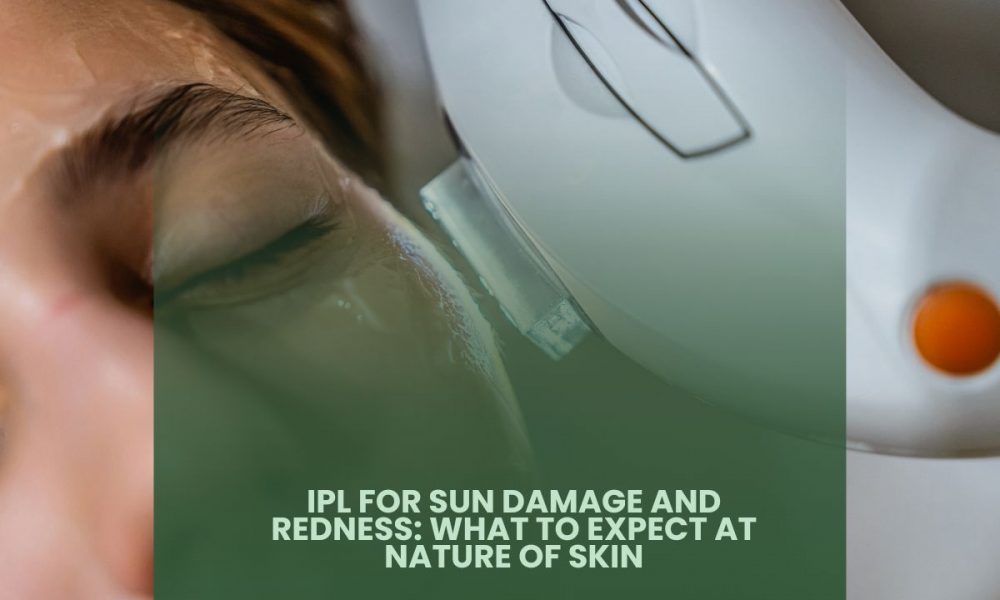
Most patients describe the sensation as a quick snap: similar to a rubber band against the skin with each pulse of light. The treatment is fast: a full face typically takes 20 to 30 minutes. You’ll be given protective eyewear, and a cool gel is applied to the skin before treatment begins to help minimize discomfort.
After your treatment:
Expect mild redness and warmth for 24 to 48 hours: similar to a mild sunburn. Dark spots will often appear temporarily darker before they begin to flake off; this is the “coffee grounds” effect that patients should know about in advance. Those treated spots are working their way out of the skin, and within one to two weeks, they’ll shed to reveal clearer skin underneath.
Visible results become apparent within two to three weeks of your first treatment, with continued improvement as the series progresses. Diligent SPF use after every session is non-negotiable: protecting treated skin from UV exposure is essential to sustaining your results.
How Many Sessions Will You Need?
Most patients see meaningful improvement after a series of three treatments spaced three to four weeks apart. Maintenance sessions every six to twelve months help sustain results and stay ahead of new sun damage.
Patients with more significant or longstanding sun damage may benefit from additional sessions: Dr. Obayan will give you a clear, realistic picture of what to expect at your consultation, not a number designed to sell you more treatments than you need.
IPL as Part of a Bigger Picture
IPL produces its best results within a broader skin health strategy. A consistent home routine: a medical-grade antioxidant, a broad-spectrum SPF used every day, and appropriate resurfacing activities protect and extend what your in-office treatments achieve.
For some patients, IPL is most powerful when paired with complementary treatments: a chemical peel to address texture alongside tone, or microneedling to stimulate collagen alongside pigment correction.
At Nature of Skin, we don’t treat presenting concerns in isolation. We look at the full picture of your skin: its history, its tendencies, your lifestyle and goals and build a plan that addresses what’s there today while supporting where you want to be a year from now.
Ready to See What’s Under the Sun Damage?
The Austin sun is relentless. But its effects aren’t permanent. IPL can clear the record your skin has been keeping and give you a cleaner baseline to protect going forward.
If you’ve been looking at those spots and that redness long enough, this is your next step. Book a consultation with Dr. Obayan and see what your skin looks like on the other side of treatment.