By July, most Austin patients already know what the sun has been doing to their skin. The spots that weren’t there last summer. The redness that’s crept in around the nose and cheeks. Their skin texture feels rougher, duller, less like your own. Sun damage accumulates quietly and then one day you’re in good lighting and suddenly all of that damage is very visible.
The good news is that meaningful repair is possible. The better news is that protecting what you repair doesn’t require staying indoors from May through September. It just requires the right approach.
What Sun Damage Actually Looks Like
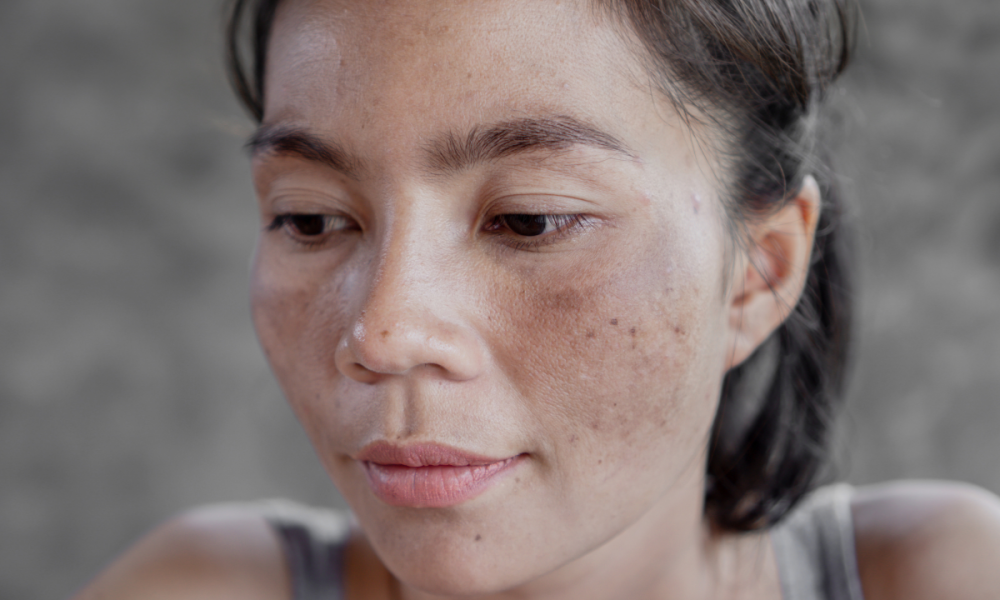
Sun exposure’s effects on the skin are not singular. You can think of sun damage more like a collection of changes that happen at different layers of the skin over a period of time. Near the surface, it shows up as dark spots, uneven tone, and a rough, dull texture that no amount of moisturizer seems to fix. Deeper down, UV radiation breaks down collagen and elastin, contributing to fine lines, laxity, and a loss of the firmness that younger skin holds naturally.
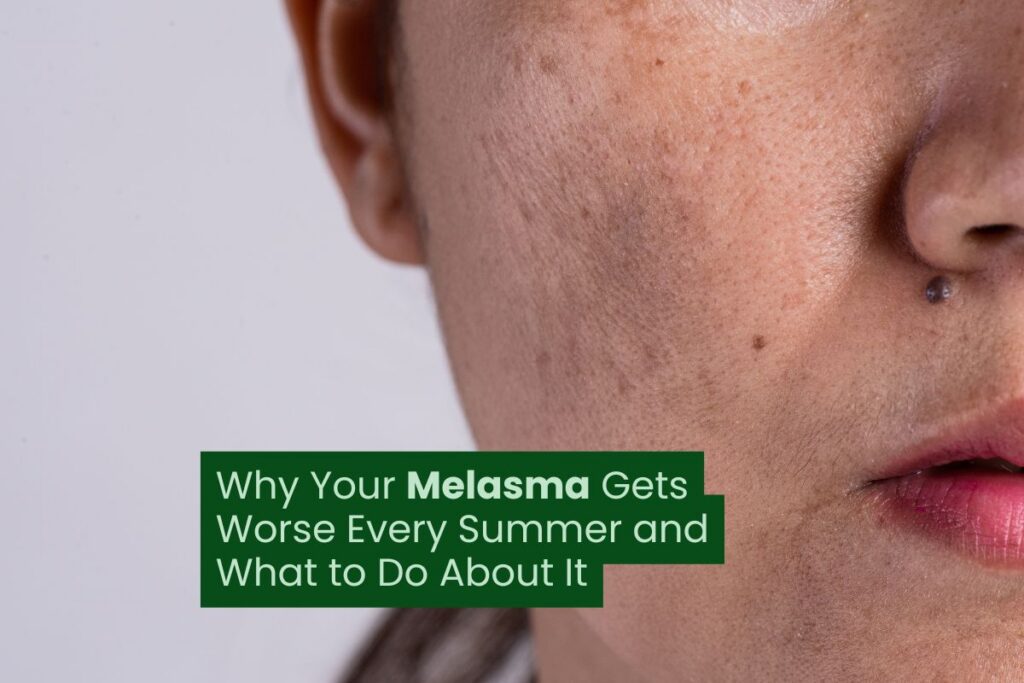
Patients with skin of color often don’t see the classic “age spots” that most sun damage content describes. What shows up instead is diffuse uneven pigmentation, melasma, and post-inflammatory darkening that can be easy to mistake for other concerns. Treatment needs to be built around how your skin actually responds, not adapted from a protocol designed for someone else.
The Repair Side: What Actually Works
There’s no shortage of products claiming to reverse sun damage. Here’s what actually has the science behind it and what we use at Nature of Skin.
Medical-Grade Topicals
A well-designed topical regimen is the foundation of any sun damage repair plan. At Nature of Skin, our integrative skin wellness approach means we build your home routine around ingredients with a real evidence base: retinoids to accelerate cell turnover and stimulate collagen, vitamin C to address pigmentation and support antioxidant defense, niacinamide to calm inflammation and even tone, and targeted brightening agents like tranexamic acid and azelaic acid for patients with stubborn pigmentation.
The right combination depends on your skin tone, sensitivity, and what you’re specifically trying to address. What works beautifully for one patient can irritate or worsen pigmentation in another, which is why this isn’t something to leave to guesswork.
In-Office Resurfacing Treatments
When topicals alone aren’t moving the needle fast enough, in-office treatments can accelerate the process significantly. Our procedures for sun damage include chemical peels formulated to address pigmentation and texture,laser and light-based treatments that target sun-induced discoloration at the source, and microneedling protocols that stimulate collagen production and improve overall skin quality from the inside out.
For patients with skin of color, treatment selection here is critical. Certain laser wavelengths and peel depths that are appropriate for lighter skin tones carry a real risk of triggering post-inflammatory hyperpigmentation in melanin-rich skin. Dr. Obayan’s expertise in skin of color means every treatment decision is made with your specific biology in mind.
“Very personable staff and great doctor. I highly recommend this place. I had tried 3 other dermatology practices before finding them. I finally feel like I found a doctor that listens, cares, and I can trust!”
Michael S., Verified Google Review
Book a consultation with Dr. Obayan to find out exactly where your sun damage stands and what will actually move the needle for your skin.
The Protection Side: Doing This Right in Austin
Repairing sun damage while continuing to accumulate more of it is a losing battle. Protection and repair have to happen at the same time, which means sunscreen isn’t optional.
Sunscreen: What Actually Works
Broad-spectrum SPF 30 minimum, SPF 50 for extended outdoor time. Applied generously; most people use about a quarter of what’s needed for full protection and reapply every two hours.
For patients with skin of color,tinted mineral sunscreens are worth knowing about. They protect against visible light (a real driver of melasma and pigmentation) in addition to UVA and UVB, and tinted formulas have largely solved the white cast problem that made older mineral options impractical for deeper skin tones.
Beyond the Bottle
Wide-brimmed hats, UPF-rated clothing, and shade-seeking between 10 a.m. and 4 p.m. work. The evidence behind them is solid, and in Austin’s July heat, they’re also more practical than reapplying sunscreen every two hours during extended outdoor activity.
An Integrative Perspective on Sun Damage
At Nature of Skin, we don’t treat sun damage in isolation. Dr. Obayan’s integrative skin wellness approach means we also consider what’s happening internally: antioxidant status, nutritional factors that support skin repair, and the lifestyle variables that either accelerate or slow the healing process. For patients dealing with significant sun damage, addressing the whole picture consistently produces better results than in-office treatments alone.
You Don’t Have to Wait Until Fall
A lot of patients assume summer isn’t the right time to address sun damage: that they should just get through the season and start fresh in September. But waiting means three more months of accumulation. The right repair and protection plan works in summer too, and starting now means your skin is in a meaningfully better place by the time fall arrives.
The brutal Texas summer can be tough on your skin. Book with Dr. Obayan and start turning the tide on what this Austin summer has been doing to your skin.