For a lot of patients, acne that was well-controlled through winter suddenly flares the moment Austin summer arrives. If that sounds familiar, you’re not imagining it. Summer creates a near-perfect storm of acne triggers and knowing what’s driving your breakouts is the first step toward actually preventing them.
Why Summer Is So Hard on Acne-Prone Skin
Acne develops when pores become clogged with oil, dead skin cells, and debris: creating an environment where bacteria thrive and inflammation follows. In summer, nearly every variable shifts in a direction that makes this more likely.
Heat increases oil production. Humidity slows evaporation, so sweat and product residue linger on the skin. And for many patients, hormonal fluctuations tied to stress and disrupted summer schedules add one more layer to an already complicated picture.
Sweat: When Perspiration Becomes a Problem
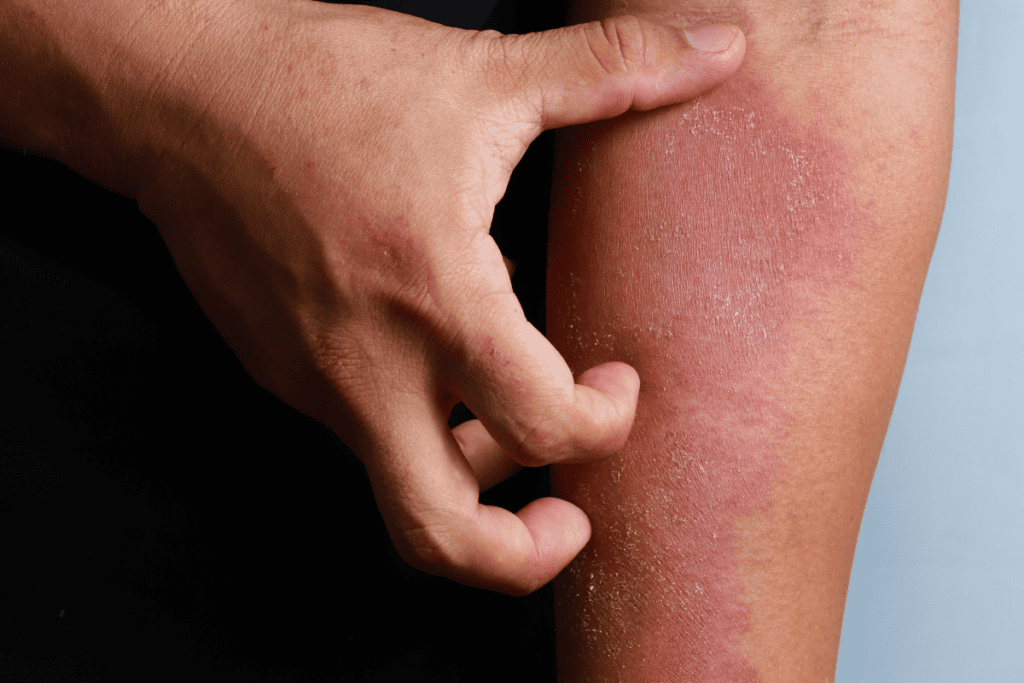
Sweat itself isn’t the enemy but sweat left on the skin for extended periods absolutely is. When it mixes with sebum, sunscreen residue, and surface bacteria, it creates a film that clogs pores and disrupts the skin’s protective barrier.
This is why patients who never break out on their face suddenly develop body acne on their chest, back, and shoulders during summer: areas where sweat accumulates under clothing and gym gear.
The fix is simple but requires real consistency:
- Cleanse as soon as possible after sweating: ideally within 30 minutes
- Use a gentle, non-comedogenic cleanser that removes sweat and product residue without stripping the skin barrier
- Change out of damp workout clothes promptly
- Consider a salicylic acid body wash for chest and back if you’re prone to breakouts there
Sunscreen and Acne: It’s About Choosing the Right One
Skipping sunscreen because it breaks you out is not an option: UV exposure worsens hyperpigmentation, accelerates aging, and raises skin cancer risk. But not all sunscreens are created equal, and for acne-prone patients, formulation matters.
Heavy, occlusive sunscreens designed for the beach can clog pores and exacerbate breakouts, especially in patients who already produce excess oil. The answer isn’t to skip SPF: it’s to find the right one.
What to look for if you’re acne-prone:
- Labeled oil-free and non-comedogenic
- Lightweight gel, fluid, or water-based formulas rather than thick creams
- Mineral-based options (zinc oxide or titanium dioxide) that sit on top of the skin rather than penetrating pores
- Tinted mineral formulas for patients with skin of color: these protect against visible light, which can worsen melasma and PIH
Dr. Obayan helps patients identify medical-grade sunscreen options that provide real broad-spectrum protection without making their acne worse.
Heat and Humidity: The Sebum Problem
Higher temperatures directly stimulate the sebaceous glands to produce more oil. In Austin’s humid summers, that oil doesn’t evaporate: it lingers, mixing with dead cells and environmental debris. The result is a more congested complexion even in patients who don’t normally struggle.
Adjusting your routine for summer can help: lighter moisturizers, more frequent gentle cleansing, and niacinamide (which can modestly reduce sebum production and minimize pore appearance) are all worth considering.
Hormones: The Summer Trigger Most People Don’t Think About
For many patients, particularly women, acne flares have a hormonal component that heat and sweat alone don’t explain. Stress hormones, especially cortisol, stimulate oil gland activity and increase inflammation. The disrupted sleep and elevated stress that often accompany summer: travel, school breaks, schedule changes can quietly drive hormonal acne even when everything else in the routine stays the same.
Hormonal acne tends to cluster along the jawline, chin, and lower cheeks. If that pattern sounds familiar, and especially if breakouts reliably worsen around your cycle, a deeper evaluation may be a valuable part of your treatment plan.
“Love this place! The office is clean, the staff is nice, and Dr. Obayan is AMAZING!! Would highly recommend any treatments.”
— Christy L. (Verified Google Review)
Book a consultation with Dr. Obayan to identify what’s driving your acne and build a summer-proof treatment plan.
Acne and Skin of Color: The PIH Problem
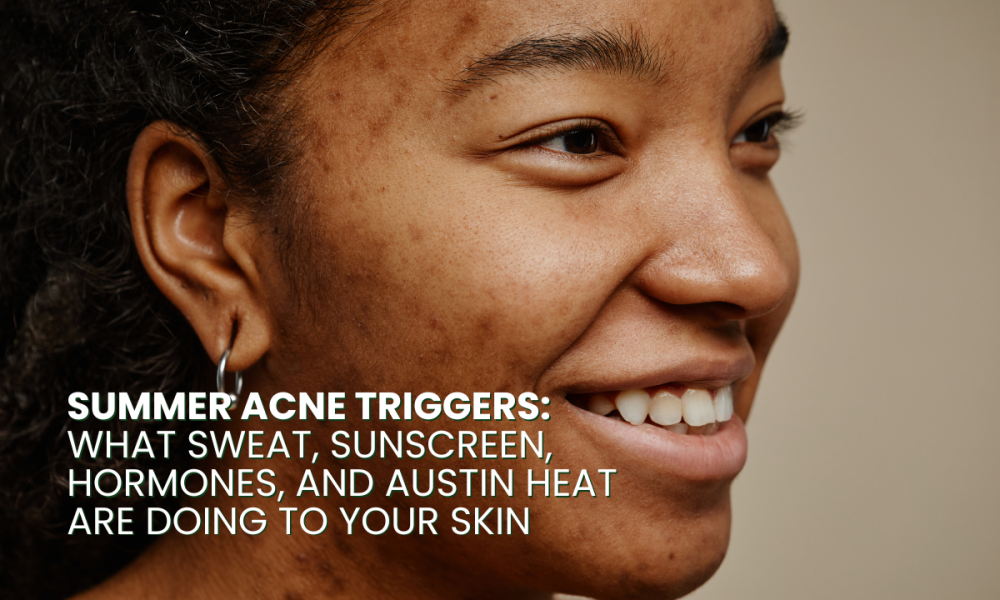
For patients with darker skin tones, acne isn’t just a breakout problem: it’s a hyperpigmentation problem. Every inflamed pimple carries the risk of post-inflammatory hyperpigmentation (PIH): dark spots that can persist for months or years after the blemish has cleared.
This is why treating acne effectively in patients with skin of color isn’t just cosmetic, it’s about preventing a secondary condition that’s often harder to treat than the acne itself. At Nature of Skin, Dr. Obayan’s approach is designed to clear breakouts while minimizing the PIH risk that comes with each one.
Your Summer Acne Doesn’t Have to Wait Until Fall
Summer acne is predictable, and it’s preventable. A treatment plan that addresses your specific drivers: sweat, oil, hormones, or some combination makes a real difference.
Another summer full of breakouts isn’t inevitable. Book with Dr. Obayan and go into this season with a plan that actually accounts for the Austin heat.